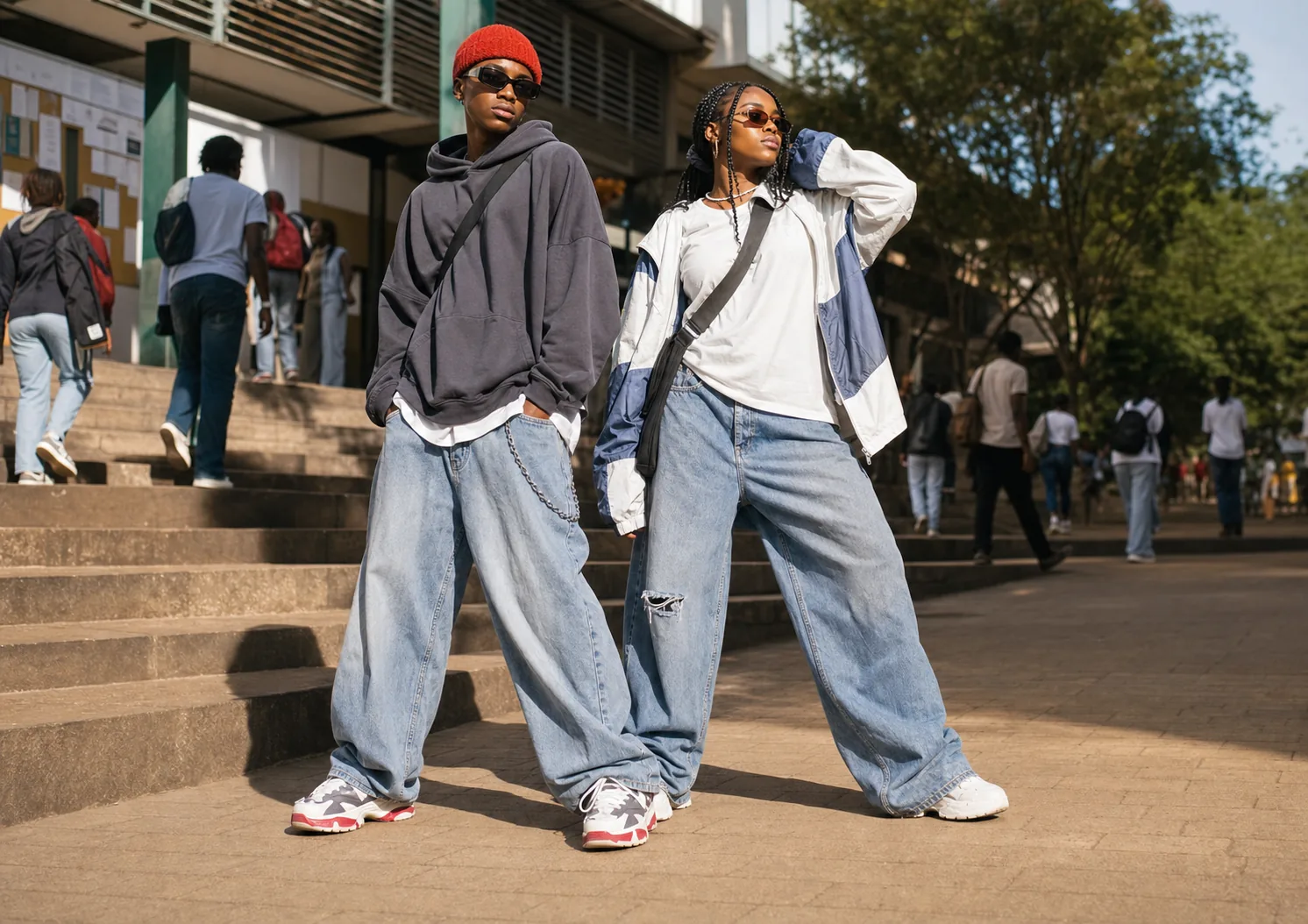
For a moment, it seemed like the Y2K resurgence would inevitably swing the pendulum back to the suffocatingly tight skinny jeans of the mid-2010s. We braced ourselves for the return of spray-on denim and shrink-wrapped tees. But Nairobi's campus students issued a collective, silent refusal. If you walk across any major university today, from KU to JKUAT to Strathmore, the silhouette is unmistakable: baggy, loose, and aggressively oversized. The big clothes are here to stay, and they are taking up all the space.
The oversized trend has moved past being just a fleeting internet aesthetic imported from TikTok. It has rooted itself deeply into the local campus culture. It’s no longer about copying a specific celebrity or influencer; it’s a default state of being. You wake up, you reach for the widest pair of pants you own, and you go about your day.
The Comfort Rebellion
At its core, the refusal to shrink back into tight clothing is a rebellion grounded in comfort. The previous decade of fashion demanded that clothes tightly conform to the body, often prioritizing a specific, hyper-curated look over basic human mobility. Today’s students are rejecting that performative discomfort.
When your day involves jumping into a packed matatu, sitting through a three-hour lecture on a hard wooden bench, and then walking across town to link up with friends, rigid denim is the enemy. Baggy clothes offer a sanctuary of fabric. They provide room to breathe, to move, and, perhaps most importantly, to hide. There is a psychological comfort in being swathed in excess fabric—a buffer between the individual and the world.

The Silhouette Math
But wearing baggy clothes isn't as simple as just buying a size XL. There is a precise science to the silhouette. The current campus uniform generally falls into two distinct styling camps.
The first is the "Big Pants, Little Shirt" ratio. This is incredibly popular among the fashion-forward girls on campus. It involves a massive, puddle-hem pair of cargos or vintage denim, contrasted with a tiny, cropped baby tee or a fitted ribbed tank. This look plays with proportion, maintaining some structure while leaning into the oversized aesthetic on the bottom half.
The second camp is the "Anti-Fit" approach—the "Big Pants, Big Shirt" combination. Popularized by skate culture and underground hip-hop, this is about complete volume. It’s an oversized graphic tee layered under an even bigger hoodie, paired with jorts (jean shorts) that fall well below the knee, or massive track pants. It’s a deliberate rejection of traditional tailoring.
The Thrift Factor
The Men's Section
Where everyone goes to find the widest, most perfectly worn-in denim.
Belt It Up
Shoelaces or massive studded belts are essential for keeping those size 38 waists on a size 30 body.
The Puddle Hem
If the back of your pants isn't slightly frayed from dragging on the floor, they aren't long enough.
Chunky Footwear
Big pants demand big shoes. Think bulky skate shoes, platform boots, or thick-soled sneakers.
What is your go-to oversized piece?
For the older generation, this style often looks sloppy or unkempt. They see clothes that "don't fit right." But for Gen-Z in Nairobi, the oversized aesthetic is a deliberate choice. It's a way of claiming space, prioritizing personal comfort over external judgment, and redefining the boundaries of what is considered presentable. The clothes are big because the attitude is big. And for now, nobody is looking to shrink.