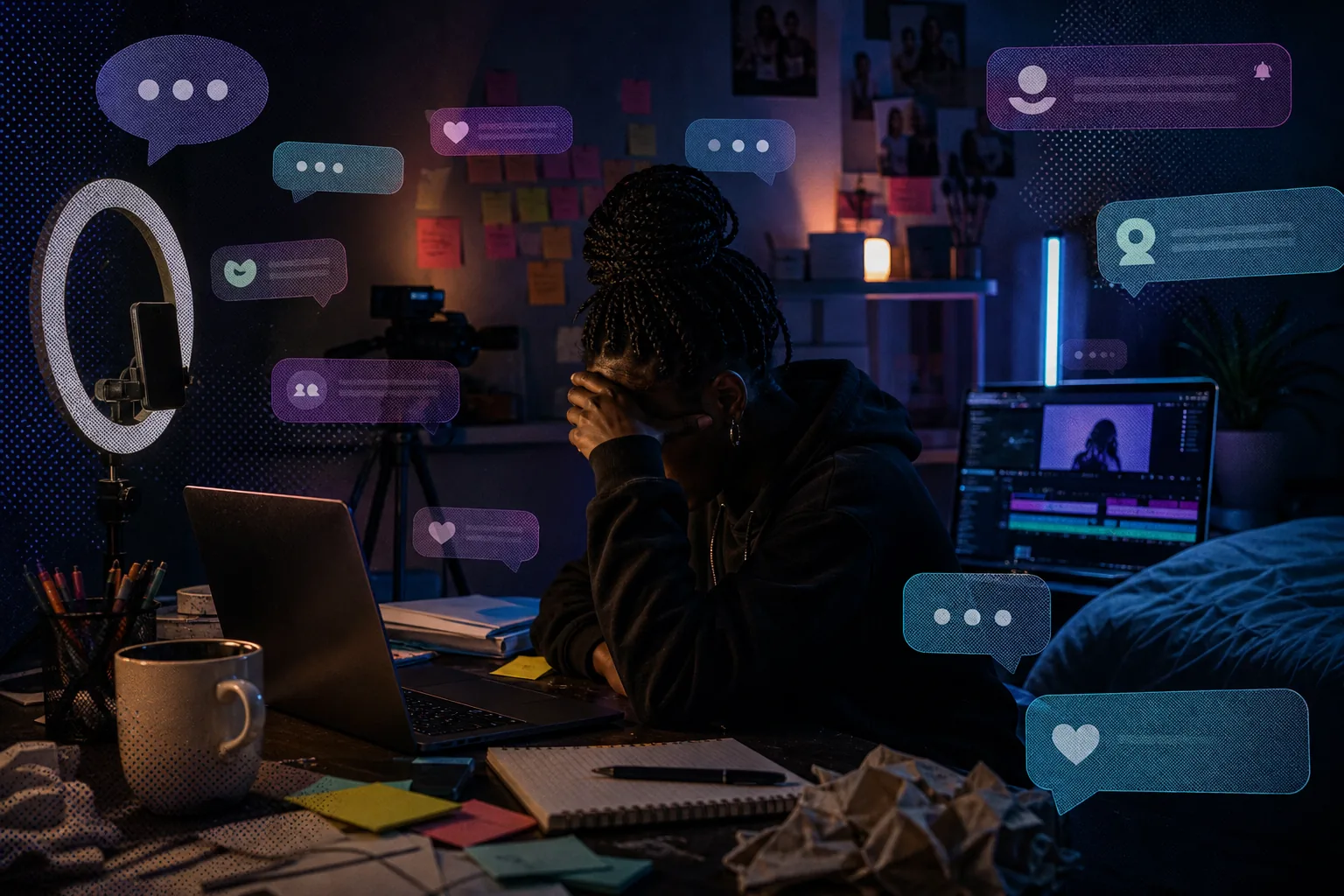
There is a specific kind of exhaustion that comes from having to perform your own life. For the casual scroller, the life of a full-time Kenyan content creator looks like a dream: free PR packages, invites to exclusive events, paid trips to Diani, and getting paid to just "be yourself" on camera. But behind the ring lights and jump cuts, a quiet crisis is brewing.
The creator economy was sold as the ultimate freedom—an escape from the 9-to-5 grind, the terrible bosses, and the stifling office politics. But many young creators have discovered that they simply traded a corporate boss for a much harsher, more erratic master: the algorithm. And the algorithm never sleeps, never takes a holiday, and ruthlessly punishes inconsistency.
This has led to a widespread but rarely discussed phenomenon: creator burnout. It happens when the line between personal life and content blurs entirely. When a breakup becomes storytime material, when a bad mental health day is monetized into a "get ready with me while I cry" video, and when a simple lunch date feels like a missed opportunity if it isn't vlogged.
The Endless Content Treadmill
The core issue is the demand for velocity. A few years ago, posting a well-edited YouTube video once a week was enough to maintain an audience. Today, the dominance of short-form video on TikTok and Instagram Reels demands daily, sometimes multiple-times-a-day, uploads. The lifespan of a viral video is incredibly short, meaning you are only ever as relevant as your last post.
For Kenyan creators, this pressure is compounded by the precarious nature of the local digital economy. Brand deals can be sporadic, payments are often delayed, and the conversion rate from views to actual shillings is lower than for creators in the US or UK. This financial instability forces creators to stay on the treadmill, constantly chasing the next viral moment just to maintain their income.

When Everything is Content
Perhaps the most insidious aspect of creator burnout is the loss of private joy. When your livelihood depends on engagement, you start viewing every experience through the lens of its potential performance. A beautiful sunset isn't just a sunset; it's B-roll. A funny conversation with a friend isn't just a moment; it's a potential podcast clip.
This constant commodification of the self leads to profound alienation. Many creators report feeling like they are playing a caricature of themselves—the "loud, funny one," the "aesthetic, put-together one," or the "hustler." Deviating from these established personas risks alienating the audience and the algorithm, trapping creators in a gilded cage of their own making.
How to Protect Your Peace Online
Batch create
Film everything on one day so you can actually log off.
Keep secrets
Have hobbies and relationships that you never, ever post about.
Diversify income
Don't rely solely on brand deals. Launch products or services.
Take real breaks
The algorithm will dip, but your mental health is more important.
Have you ever felt burnt out just from consuming content?
The conversation around creator burnout is slowly shifting. We are seeing a rise in "anti-hustle" content, where creators actively discuss their need for breaks and set firmer boundaries with their audiences.
Ultimately, the creator economy needs a structural rethink. The current model—which demands infinite, escalating growth from finite human beings—is unsustainable. Until the platforms change how they reward content, the responsibility falls on the creators to protect their most valuable asset: their own peace of mind.