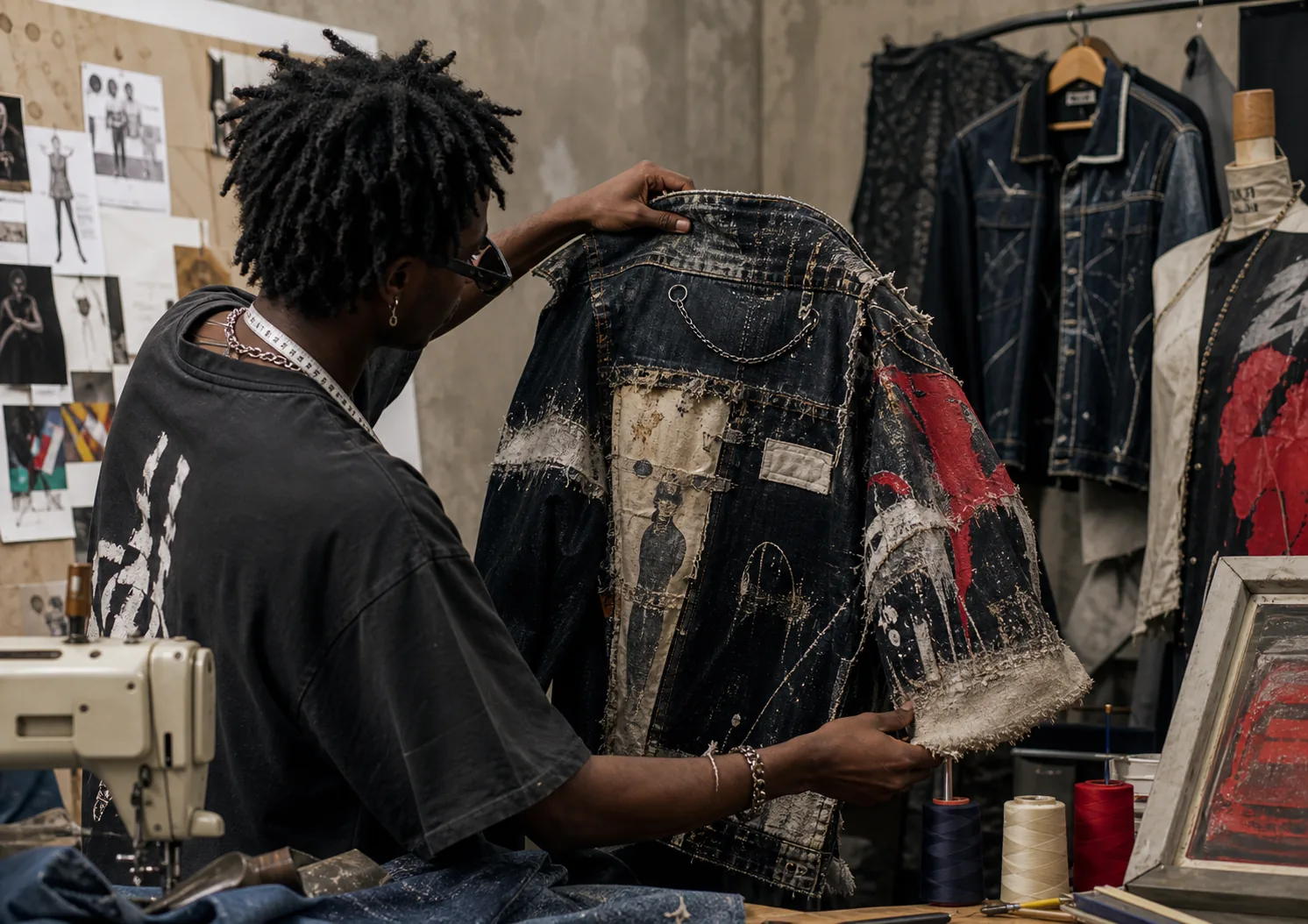
There is a cardinal sin in Nairobi’s underground fashion scene, and it is the sin of being easily replicable. In a city where fast-fashion knockoffs flood the stalls of Eastleigh and identical Zara-style drops fill every boutique in town, true cultural currency belongs to those who possess what no one else can have. This is the era of the 'One of One'—custom, upcycled, hand-painted, or radically altered garments that exist in singular isolation.
The movement is being driven by a new wave of young, self-taught designers and DIY enthusiasts who have rejected the traditional seasonal collection model. Instead, they are treating clothing like fine art. They drop a single, meticulously crafted piece on Instagram, watch their followers scramble for it in the comments, and once it’s gone, it’s gone forever. No restocks. No pre-orders. Just scarcity.
The Death of the Uniform
For a long time, streetwear was about uniform. You wanted the specific sneaker, the recognizable logo, the exact hoodie that signaled you belonged to a certain tribe. But as these items became widely available—and widely counterfeited—the prestige evaporated.
The 'One of One' rule is a direct reaction to this hyper-accessibility. If anyone with M-Pesa can buy the same graphic tee, then the graphic tee holds no cultural weight. True status is walking into an event knowing with absolute certainty that no one else in the room, the city, or the world is wearing what you are wearing.

The Upcycling Revolution
The bedrock of this movement is upcycling. Designers source raw materials from Gikomba—vintage denims, oversized blazers, military surplus bags—and completely deconstruct them. A pair of jeans might be spliced with leather patches, acid-washed, embroidered with cryptic poetry, and held together by safety pins and heavy-duty staples.
This DIY approach blurs the line between a designer and an artist. The imperfections are not flaws; they are the point. A crooked stitch, a paint splatter, or an asymmetrical cut serves as the creator's signature, authenticating the piece as a handmade, bespoke item. It tells a story of labor and individual expression that a factory-made garment can never replicate.
Weaponizing Scarcity
The Ghost Drop
Posting the item on IG stories at a random time and deleting it once sold.
The Archival Vibe
Treating pieces like museum artifacts rather than just clothes.
Client Selection
Some designers will refuse to sell to you if they don't think you can style it right.
The Custom Commission
Collaborating directly with the designer for a piece tailored to your specific aesthetic.
Would you pay a premium for a 1-of-1 piece?
The 'One of One' phenomenon in Nairobi is more than just a fashion trend; it's a structural critique of how we consume clothing. By rejecting mass production, these young creatives are forcing us to slow down, to appreciate the craftsmanship, and to view our outfits as personal statements rather than just branded uniforms. In the underground scene, exclusivity isn't about the price tag—it’s about the irreplicable magic of a singular idea.