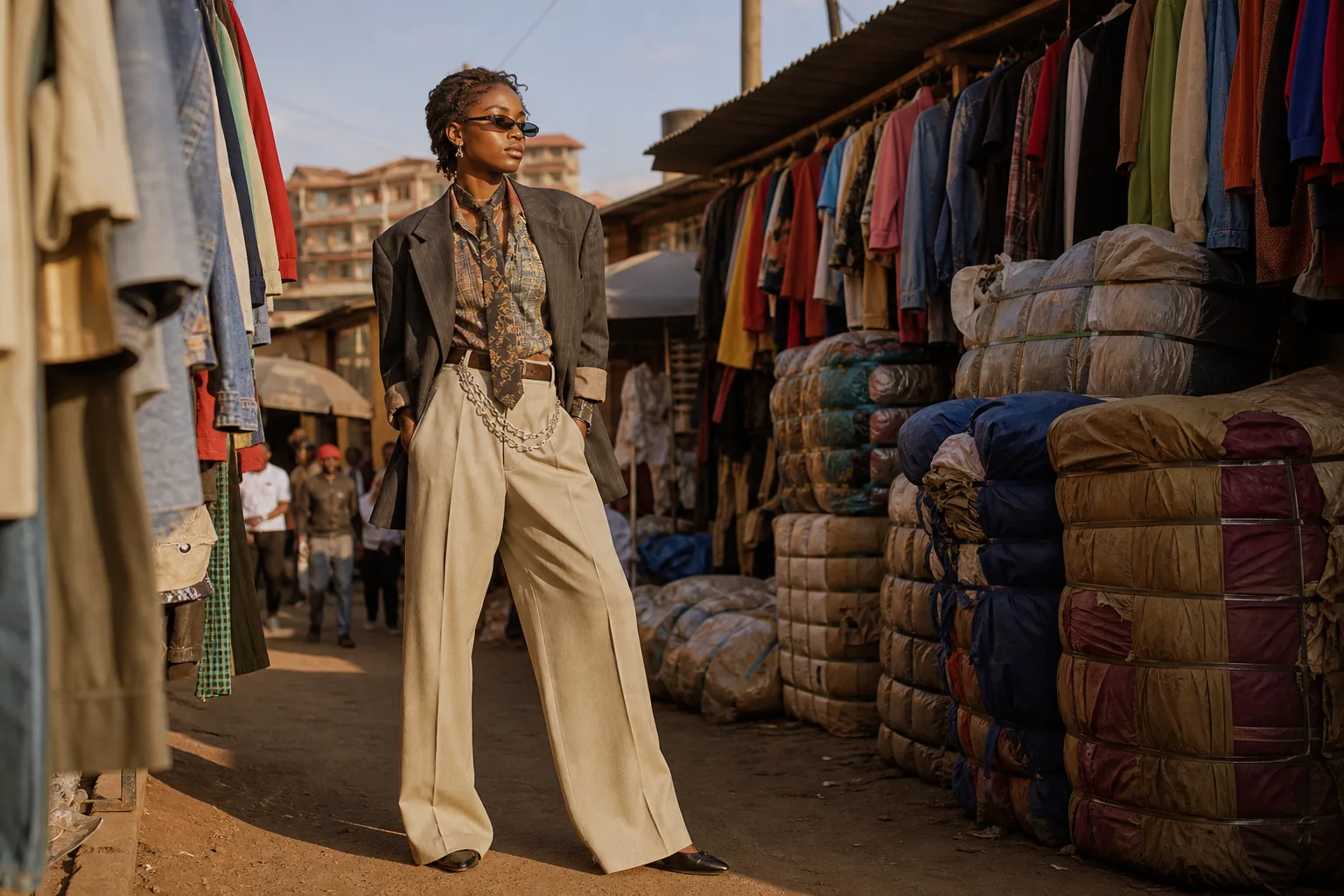
For a long time, the narrative around thrifting in Kenya was purely about necessity. The vast, winding corridors of Gikomba, Toi, and Mutindwa markets were places you went to stretch a tight budget, hunting for passable basics to get through the semester or the work week. But the script has completely flipped. For Nairobi’s Gen-Z, the second-hand clothing market is no longer a compromise—it’s an exclusive luxury boutique. Welcome to the era of 'Gikomba Luxe'.
Today, dropping a major fashion brand name in a conversation doesn't hold the weight it used to. In fact, wearing a head-to-toe designer fit might even get you labeled as "try-hard" or boring. The real flex is when someone stops you to ask where you got your distressed leather racing jacket or perfectly faded Y2K cargo pants, and you can casually reply, "Oh, it's thrifted. Camera 1 from Gikosh."
The Curation Economy
The shift towards viewing thrifting as high fashion has given birth to a thriving curation economy. Not everyone has the stamina to wake up at 4:30 a.m. on a Wednesday to wrestle through the "camera" bales—the highest quality, first-pick clothes straight out of the shipping containers. Enter the Instagram thrift curators.
These are the plugged-in fashion kids who do the heavy lifting for you. They navigate the muddy alleys, negotiate with the hard-nosed vendors they’ve built relationships with over years, and emerge with absolute gold: archive Prada nylon bags, pristine Carhartt double-knee pants, and obscure 90s band tees. They wash, steam, and style these pieces on aesthetic backgrounds, marking them up significantly. And their drops sell out in seconds.
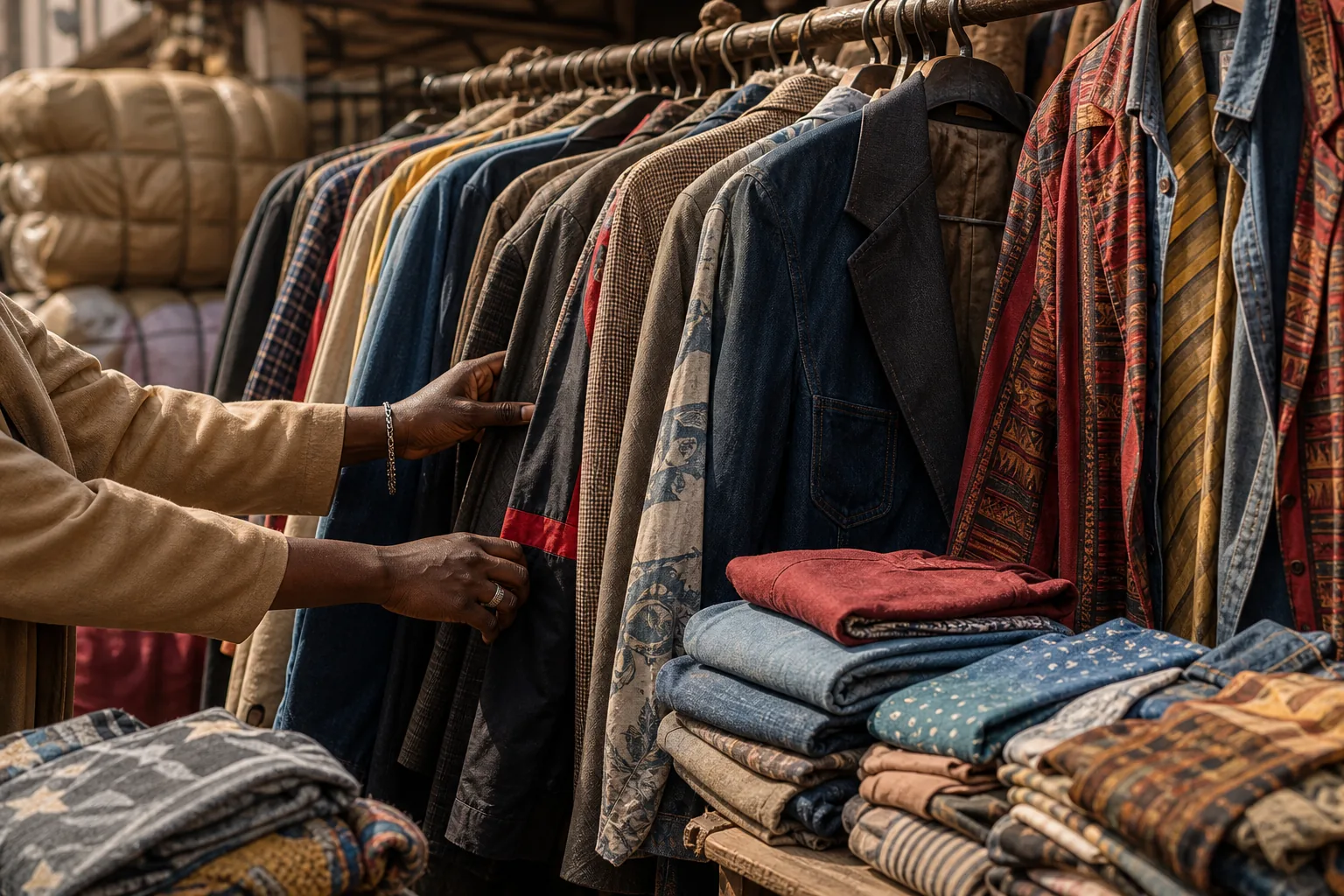
Styling is the True Status Symbol
The essence of Gikomba Luxe isn't just about finding the items; it's about how you put them together. The high-low mix is the defining uniform of the Nairobi creative class. It’s a 150-shilling thrifted football jersey paired with imported Salomon sneakers. It’s a perfectly worn-in denim maxi skirt anchored by a sleek, structured micro-bag.
This approach democratizes style while elevating taste. Money can buy you expensive clothes, but it can't buy you the eye required to spot a Yohji Yamamoto silhouette hiding in a heap of generic slacks. In this new fashion economy, taste and styling ability are the ultimate currencies. The messier and more chaotic the market, the sweeter the victory of a perfectly assembled fit.
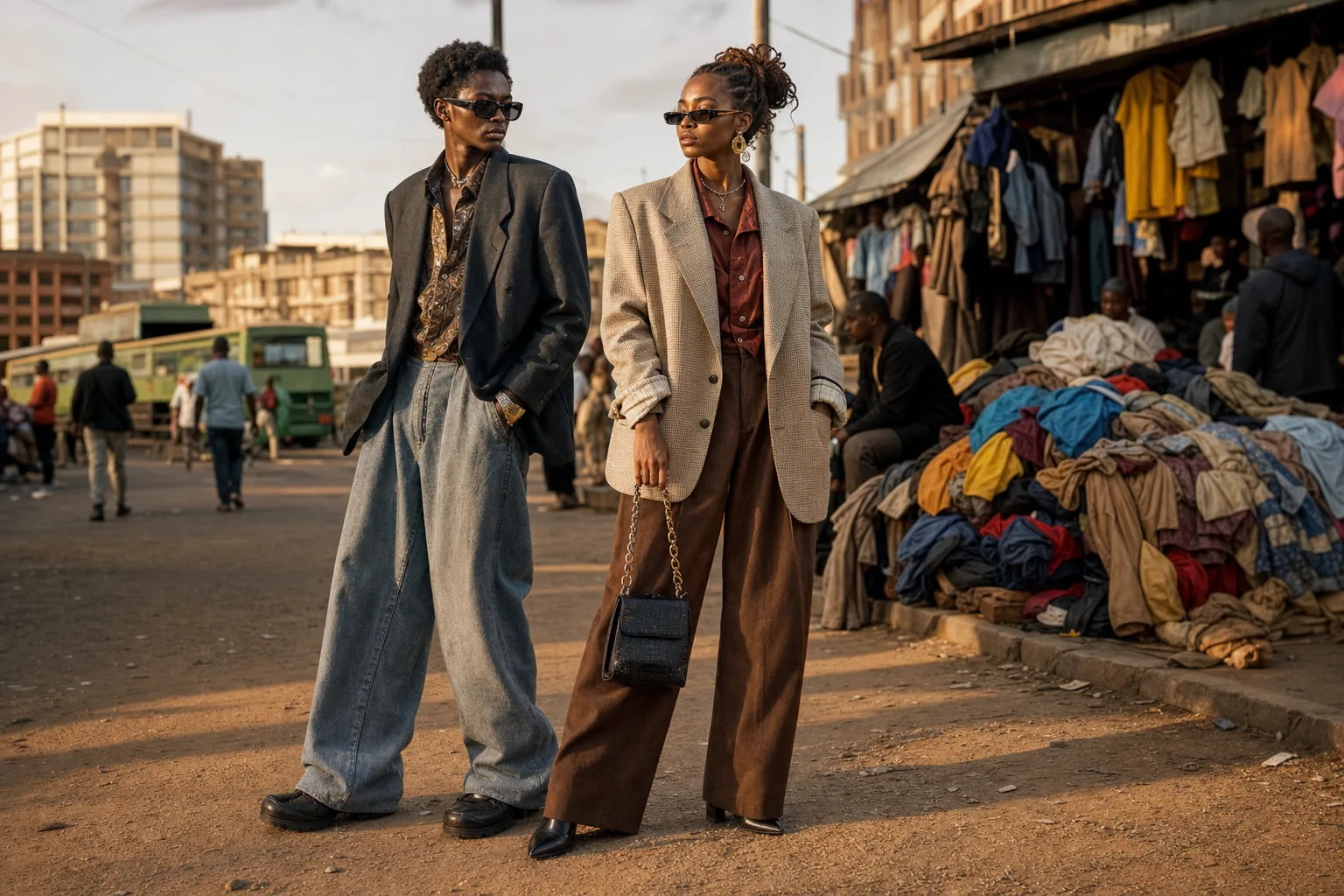
Accidentally Sustainable
While global fashion conversations are heavily focused on sustainability and the evils of fast fashion, for Nairobi's youth, the eco-friendly nature of thrifting is often just a happy accident. Yes, there's an underlying awareness that recycling clothes is better for the planet than ordering a massive Shein haul. But if you ask the average campus student why they prefer the market, the answer is rarely about carbon footprints.
It's about the aesthetic. The quality of a vintage Levi's jacket from 1998 far surpasses anything you can buy off the rack at a fast-fashion outlet today. The distressing is real. The fading is earned. The character of the garment is baked into its seams.
The New Rules of the Hunt
Arrive early, leave fast
The best camera pieces are gone by 6 a.m. If the sun is fully up, you are too late.
Make friends
A vendor who knows your style will hide the best pieces for you before the bale even opens.
Feel the fabric
Look past the stains and the smell. Quality stitching and heavy cotton always wash well.
Tailoring is magic
Buy for the silhouette and the fabric; a local tailor can fix the waist or crop the hem for cheap.
What is your ultimate thrifting grail?
Ultimately, Gikomba Luxe is a testament to the ingenuity of Kenyan youth. It’s a subculture that took a system of cast-offs and secondhand goods and spun it into gold. They have redefined what it means to be well-dressed in the city, proving once and for all that real style isn't imported from a runway in Paris or Milan—it's unearthed, haggled for, and meticulously styled right here at home.