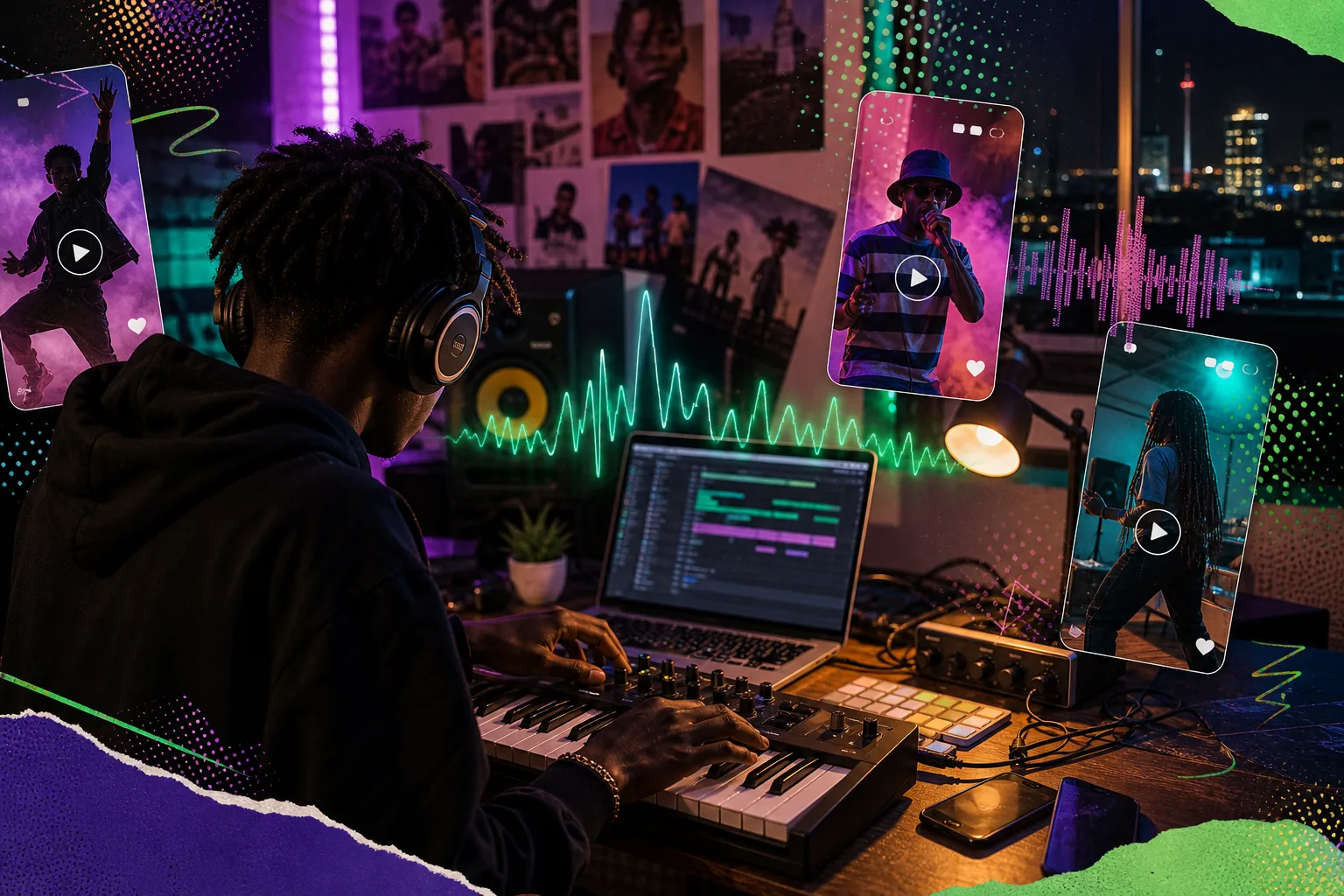
The old guard of the Kenyan music industry used to hold the keys to the kingdom. If you wanted a hit, you needed studio time, an established producer, a budget for mixing, and connections at local radio stations. Today? All you need is an internet connection and a screen recording app.
A silent revolution has taken place in the bedrooms and hostels across Nairobi. Gen-Z producers, some barely out of high school, are bypassing the traditional gatekeepers entirely. They aren't waiting to be discovered by a label; they are building their own ecosystems on TikTok, and in the process, they are aggressively reshaping the sonic identity of the city.
The Minimum Viable Studio
The aesthetic of the modern hitmaker is decidedly unglamorous. There are no massive soundboards or acoustically treated rooms. The setup is brutally minimalist: a decent laptop (often a hand-me-down or bought for "schoolwork"), a pair of mid-range headphones, and a copy of FL Studio or Ableton Live.
What they lack in high-end gear, they make up for in obsessive technical fluency. These kids have grown up on YouTube tutorials. They know how to EQ a kick drum to make it punch through smartphone speakers, which is where 90% of their audience will hear the track anyway. The constraints of their equipment have forced them to be inventive, leading to a raw, unpolished sound that feels authentic to the streets.

TikTok as the New A&R
The traditional workflow—produce a beat, find an artist, record, mix, master, release—has been inverted. Now, a producer makes a 30-second loop, screen records their DAW (Digital Audio Workstation) playing the beat, and posts it on TikTok with the caption: "Who can jump on this?"
The app's algorithm does the rest. Within hours, aspiring vocalists are using the 'Duet' feature to drop verses over the instrumental. If the combination catches fire, the producer and the vocalist link up (often just sending stems via WhatsApp or Telegram), finish the track, and push it to Spotify. This rapid prototyping means the distance from idea to viral hit can be less than 48 hours.
A Sonic Melting Pot
Because these producers are chronically online, their influences are borderless. The beats coming out of these bedrooms are a fascinating hybrid. You will hear the ominous sliding 808s of UK Drill, the syncopated log drums of South African Amapiano, and the smooth, melodic chord progressions of Bongo Flava.
Yet, it never sounds like a cheap imitation. They anchor these global sounds with distinctly local elements: a sample from an old Moi-era news broadcast, the rhythmic tapping of a glass soda bottle, or ad-libs shouted in heavy Sheng. It’s a sound that is globally legible but locally rooted.
What Needs to Change?
Music Business 101
Producers need to understand splits and publishing.
Quality Control
Moving from a 15-second loop to a structured song.
Monetization
Translating TikTok views into actual streaming revenue.
Mental Health
Managing the burnout of constant algorithmic demands.
The decentralization of the Nairobi music scene is complete. The power no longer resides in plush studios or executive boardrooms. It lives on hard drives, in Telegram group chats, and on the For You Page. Gen-Z bedroom producers haven't just changed the sound of the city; they've completely rewritten the rules of how the game is played.